
News Summary · 6 minutes read
Stay ahead in your UPSC CSE preparation with our daily News Summary. Designed to save time, it highlights key national and international events from leading newspapers and government websites.
Parliamentary panel highlights IBC 2016 challenges
- Recently, the Parliamentary Standing Committee on Finance released a report titled ‘Review of Working of Insolvency and Bankruptcy Code and Emerging Issues’.
- The report notes the +ve aspects of the Insolvency and Bankruptcy Code (IBC), 2016, but also highlights the persistent and systemic challenges hindering its performance.
+ve aspects of IBC 2016
- Has improved ease of doing business in India.
- Hundreds of companies have been successfully resolved → creditors have recovered over 170% of the liquidation value and more than 93% of the fair value of these companies.
- Resolved firms demonstrated significant operational and financial turnarounds, with increased sales and asset growth.
- The IBC’s deterrent effect has caused the settlement of significant debt before formal admission.
Challenges
- Delays in proceedings due to a shortage of National Company Law Tribunal (NCLT) benches, vacant judicial and administrative staff positions, and widespread frivolous litigation and appeals.
- Impede rapid value realisation and lead to the deterioration of assets.
- Excessive litigation burden → strains adjudicating authorities.
- Average time taken in the Corporate Insolvency Resolution Process (CIRP) is 713 days, as compared to the mandated 330-day timeline.
- Conflict between IBC and the Prevention of Money Laundering Act (2002).
- Contentious issues surrounding excessive haircuts for creditors
- Overall recovery is only 32.8% of the total admitted claims.
- Lack of transparency and accountability in asset valuation → valuation is based on liquidation potential rather than enterprise value.
- Incomplete implementation of key frameworks, such as the individual insolvency framework and the pre-packaged mechanism for MSMEs.
Recommendations
- Set up additional NCLT benches and accelerate the operationalisation of the Integrated Technology Platform (iPIE) for centralised case management.
- Insolvency and Bankruptcy Board of India (IBBI) should prescribe a mandatory upfront threshold deposit for unsuccessful resolution applicants filing appeals, and the minimum penalty for frivolous applications should be increased.
- Shift the focus of asset valuation from liquidation value to enterprise value.
- A transparent e-auction process should be ensured for greater competition.
Supreme Court (SC) denies legal rights to illegal immigrants
- While hearing a habeas corpus petition regarding Rohingyas, the SC made the following observations:
- Intruders and illegal immigrants have no legal right.
- Benefits and amenities should be focused on Indian citizens rather than on those who have entered illegally.
- But illegal immigrants cannot be subjected to custodial torture.
International Law
- 1951 Refugee Convention: India has not signed it → but India accepts the principle of Non-Refoulement (no forced return to persecution) as a customary international law.
Indian Laws and policies
- Refugee issues in India are governed by the Foreigners Act, 1946, Registration of Foreigners Act, 1939, Passports Act, 1967, and the Citizenship Act, 1955.
- India grants refugee status via strategic ambiguity using executive/administrative channels rather than legislative ones → granted refugee status to Tibetan Refugees, Sri Lankan Tamil Refugees, Chakma and Hajong Refugees, etc.
Parliamentary panel examines high medicine prices
- Parliamentary Standing Committee on Chemicals and Fertilisers has released a report titled “Price rise of medicines in the pharmaceutical sector impacting the lives of ordinary citizens adversely”.
- The report raised concerns over excessive profiteering, delayed policy reforms, and the absence of adequate legal mechanisms to ensure affordable access to essential drugs.
Key findings
- Medicines are costly due to huge profit margins, sometimes more than 500% → unaffordable for ordinary citizens.
- Only medicines listed as essential under the National List of Essential Medicines (NLEM) are price-controlled → others (non-scheduled drugs) are not regulated at the initial pricing stage, allowing companies to set very high MRPs.
- Govt and the National Pharmaceutical Pricing Authority (NPPA) do not have access to real cost data, which hides how much profit is added at each level.
- Trade Margin Rationalisation (TMR) has not yet been made a permanent policy, despite years of discussion.
Recommendations
- TMR should be made a legal and permanent tool so that drug prices cannot be inflated across the supply chain.
- Prices of commonly used non-scheduled drugs should be regulated.
- A system should be created to collect real-time pricing data from companies, hospitals, and online sellers.
India’s drug regulation framework
- Department of Pharmaceuticals (DoP): under the Union Ministry of Chemicals and Fertilizers.
- National Pharmaceutical Pricing Authority (NPPA): under the DoP → implements and enforces the Drugs (Prices Control) Order (DPCO), 2013.
- Drugs (Prices Control) Order (DPCO), 2013: regulates prices based on the National List of Essential Medicines (NLEM).
- National Pharmaceutical Pricing Policy (NPPP), 2012: aims to ensure the availability of essential medicines at reasonable prices.
RBI reclassifies SBI, HDFC Bank, and ICICI Bank as D-SIBs
- The status of these three banks has been maintained as before in the RBI’s 2025 list of Domestic Systemically Important Banks (D-SIBs).
- D-SIBs: banks whose failure can severely impact the national economy.
- Considered “too big to fail” and essential for financial stability.
- Must maintain additional Common Equity Tier-1 (CET1) capital over and above regular requirements.
- RBI released the D-SIB framework in 2014 → identifies banks based on: Size, interconnectedness, substitutability, and complexity → Based on Basel-III guidelines.
Note: If a foreign bank with a branch in India is a Global Systemically Important Bank (G-SIB), it must maintain an additional CET1 capital surcharge in India, proportional to its Risk Weighted Assets (RWAs) in India.
Govt revises definition of small companies
- Revised by the Ministry of Corporate Affairs under the Companies (Specification of Definition Details) Amendment Rules, 2025.
- A company will qualify as a small company if:
- Paid-up capital does not exceed ₹10 crore.
- Turnover does not exceed ₹100 crore in the previous financial year.
Quick Picks for Prelims and Mains (QPPM)
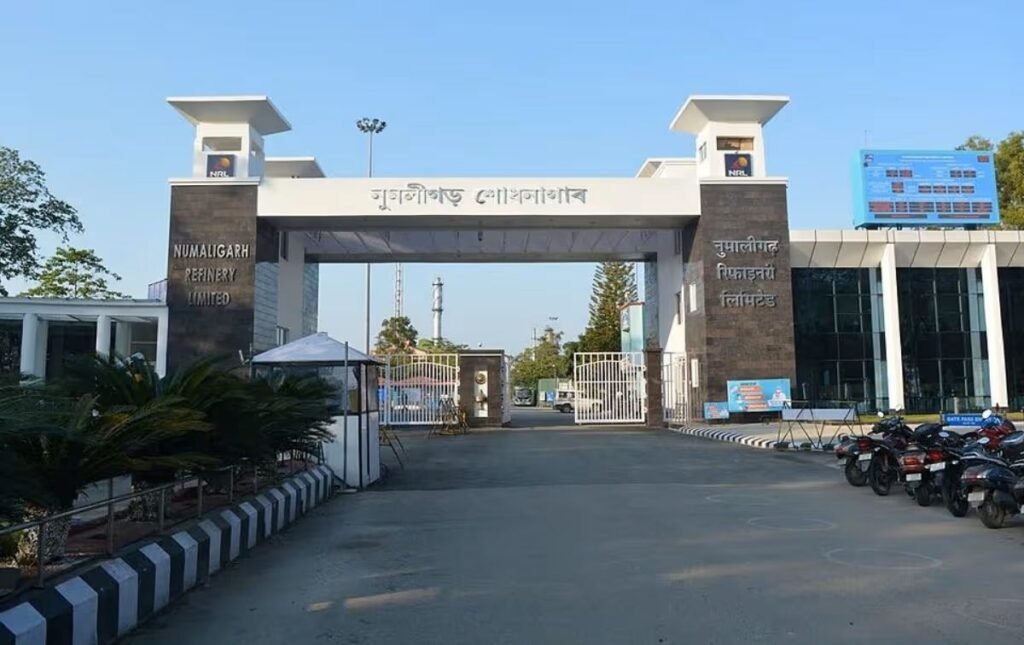
- Numaligarh Refinery Limited (NRL): became 27th Navratna company.
- Ratna scheme (Navratna and Miniratna categories) was introduced in 1997 to grant greater autonomy to high-performing Central Public Sector Enterprises (CPSEs) → Maharatna category was introduced in 2010.
- Credit cards accounted for the largest share of customer grievances under the Reserve Bank – Integrated Ombudsman Scheme (RB-IOS) in FY25.
- RB-IOS was launched in 2021 → integrated three prior schemes: Banking Ombudsman Scheme (2006), NBFC Ombudsman Scheme (2018), and Ombudsman Scheme for Digital Transactions (2019).
- The State of the World’s Land and Water Resources for Food and Agriculture (SOLAW) 2025: recently published by the Food and Agriculture Organization (FAO).
Practice: Daily Current Affairs Quiz ↗️
Read: News Summary ↗️
Subscribe: Telegram Channel ↗️
Join: Telegram Group ↗️