
News Summary · 5 minutes read
Stay ahead in your UPSC CSE preparation with our daily News Summary. Designed to save time, it highlights key national and international events from leading newspapers and government websites.
Contents
hide
IndiGo flight disruptions 2025
- India’s largest airline IndiGo has recently faced acute crew shortages, leading to hundreds of flight cancellations and delays.
- Reason behind crew shortages is the new/revised Flight Duty Time Limitation (FDTL) rules, which have reduced pilot flying hours and increased crew requirements → Indigo failed to arrange for extra crew to comply with the new rules.
Revised FDTL rules
New rules were issued by DGCA in 2024 and implemented in 2025 → aim to better manage pilot fatigue, which is a key risk to aviation safety. Under new rules:
- Weekly continuous rest is increased from 36 hours to 48 hours for pilots.
- Night period for duty/landing limits is extended to 00:00–06:00.
- Night landings are capped at two per night.
- Annual fatigue training of pilots is mandated.
National Intelligence Grid (NATGRID)
- Conceptualised in 2009 in the aftermath of the 26/11 Mumbai terror attacks → became operational in 2020.
- Accessible only to Police (Superintendent of Police-rank officers) and security agencies (IB, RAW, NIA, CBI, ED, etc.) → they can securely access government and private databases under NATGRID in real time.
- Aggregates data on immigration, banking, telecom, travel, and more, supporting investigations into terrorist activities, organised crime, narcotics, human trafficking, cybercrime, fake currency, and smuggling.
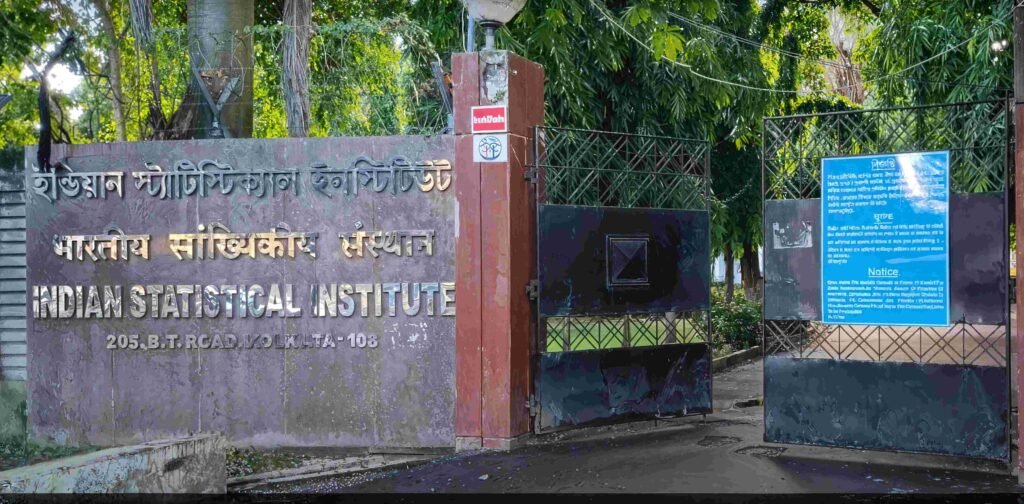
Students, academics oppose draft ISI Bill, 2025
- Recently, the Ministry of Statistics and Programme Implementation (MoSPI) released the draft Indian Statistical Institute Bill, 2025 → proposes to convert Indian Statistical Institute (ISI) from a registered society to a statutory body corporate.
- Students and faculty members are opposing the Bill who claim that the bill on the ground that it will end ISI’s academic autonomy.
Indian Statistical Institute (ISI)
- Founded in 1931 by P.C. Mahalanobis in Kolkata.
- Originally registered in 1932, under the Societies Registration Act of 1860, and later re-registered under the West Bengal Societies Registration Act of 1961.
- Being a society, it has its rules and regulations.
- ISI Act, 1959, declared it as an Institution of National Importance.
- It facilitated the development of the National Sample Survey Organisation (NSSO).
- Scholars like P. C. Mahalanobis, Professor C.R. Rao, and S.R.S. Varadhan have been associated with ISI.
Challenges of India’s criminal justice system
India’s criminal justice system:
- Suffers from colonial-era legacies, resource shortages, and procedural inefficiencies, resulting in low conviction rates, delayed justice, and eroded public trust.
- Undermined by double injustice: wrongful harm to the accused and denial of justice to victims, while allowing the truth to remain unresolved.
Major challenges
- Investigative failures and weak prosecution: often evidence is tainted, poorly collected, or legally unsustainable → when investigations cannot withstand judicial scrutiny, prosecutions fail despite the gravity of offences.
- Example: In the Nithari killings case, both accused were acquitted because evidence failed to meet basic legal standards.
- Wrongful incarceration: often individuals spend decades in prison as undertrials or convicts, only to be acquitted later on technical or procedural grounds.
- Stringent bail laws: bail becomes nearly impossible under stringent laws, turning pre-trial detention into punishment.
- No statutory framework for compensation exist to compensate individuals who lose years of their lives due to wrongful prosecution, flawed forensics, or investigative lapses.
- No system to restore dignity after acquittal: wrongfully accused persons face irreparable harm even after acquittal → social stigma persists and they are permanently labelled as rapist, killer, or terror suspect.
- Denial of justice to victims: when cases collapse due to insufficient evidence, the system often abandons the search for the real offender.
- Unscientific forensics: outdated, improper, or scientifically unsound forensic methods lead to wrongful convictions and delayed acquittals.
- Lack of Accountability: investigators, forensic experts, and prosecutors face no consequences for mishandling evidence, using unscientific methods, building fragile cases, or causing years of wrongful incarceration.
- Lack of data-driven evaluation: no transparent nationwide system exists to track quality of investigations, forensic accuracy, conviction quality, timelines for case processing, or decision patterns in prosecution → systemic failures remain hidden and unreformed.
- Procedural closure over substantive justice: courts dispose of cases, but justice remains incomplete when truth is not discovered.
Organ transplants in India
- Organ transplant in India is governed by the Transplantation of Human Organs and Tissues Act, 1994, which deals with both types of transplants:
- Transplants from deceased persons
- Live donations.
- Despite the dedicated Act, India’s performance is dismal in organ transplantation → India recorded only 0.77 deceased donations per million of population in 2023 (to compare, it was over 49 in Spain).
- Nearly half a million Indians die every year in need of transplantation.
Causes undermining organ donation in India
- Lack of public awareness about brain death certification and the organ donation process, leading to myths and reluctance.
- Families often withdraw consent due to emotional grief, overriding prior pledges by the deceased.
- Cultural and religious beliefs in body wholeness after death prevent donations across communities.
- Distrust in medical system: fears of organ black markets, poor transparency, and unethical practices deter people from pledging for organ donation.
- Inadequate infrastructure: shortage of ICUs, ventilators, and trained staff limits identification of brain-dead donors.
- Legal and procedural ambiguities: confusion over brain death equivalence to cardiac death and certification rules undermines organ donation.
- Bureaucratic hurdles: mandatory approvals for doctors and hospitals restrict brainstem death (BSD) certification to a few centres.
- Urban-rural disparities: transplant facilities are concentrated in metros, leaving potential donors in smaller towns behind.
- Low pledge registration: few people register as organ donors due to reasons such as complex processes, lack of awareness, and cultural beliefs.